
The hour that moves
On Sunday, Nov. 1, at 2 a.m., clocks fall back one hour and most of the country returns to standard time. Congress adjourned without passing the bill that would have ended the switch, so the change is happening. Where clocks change, sunset arrives about an hour earlier on Nov. 1 than it did the day before, and it keeps getting earlier through November and December. Standard time then runs until March 14, 2027.
Overnight, the evening rush of shoppers, second-shift crews, students, patients and tenants walking to their cars moves out of daylight and under your site lights.
Why the early evening matters
According to NHTSA, 76% of U.S. pedestrian deaths in 2024 happened in the dark. In 2023, the largest share, 26%, happened between 6 and 8:59 p.m., the same early-evening hours that move into darkness after the change. Light also affects security. In a randomized New York City study by the University of Chicago Crime Lab, added lighting at public housing developments cut serious outdoor nighttime crime by at least 36%. Those were temporary light towers in one setting, so read it as evidence that light matters, not a promise for every property.
Take a 30-minute walk after dark
- Walk the property on the first evening after the change and write down
- Fixtures that are out, dim, cycling or a different color than their neighbors
- Dark gaps between poles and at entrances, crosswalks and loading areas
- Mechanical time clocks are still on daylight time. They need a manual reset when it gets dark earlier.
- Dirty photocells or lenses, and any poles you plan to replace soon
One fixture family for the punch list
ECOLUME’s OptiProSelect Area & Flood luminaire is built for this kind of fix. Light output, color and distribution are all set in the field, so a crew can match each pole’s position, such as a perimeter pole or one in the middle of the lot, without reordering.
It comes in two voltage options, 120–277V and 347–480V, which doubles the available configurations and lets one fixture family cover both standard and high-voltage sites.
Facility managers can standardize on one family across the property. Contractors carry fewer models and handle layout changes with a switch instead of a return trip. Photocell control turns lights on at dusk without waiting on a time clock.
ECO OptiProSelect Area & Flood OPS-AR Series | set in the field
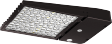
Voltage: 120–277V or 347–480V
Lumens: 15k / 21k / 24k or 30k / 35k / 40k lm
Color: 3000K, 4000K or 5000K
Distribution: Type III, IV or V by switch
Controls: NEMA photocell receptacle, 0–10V dimming standard, sensor-ready
Outdoor-rated: IP65, IK08, 6kV surge, −40°F to 122°F
Listings: cULus wet location, DLC Premium, 5-year warranty
Darker evenings start Nov. 1. Get ahead of the punch list.
Send your fixture count, site plan or photos of your dark spots for an OptiProSelect cross-reference.
Larry Smith | 678-327-7628 | larry@ecolumeled.com | ecolumeled.com/optipro-select